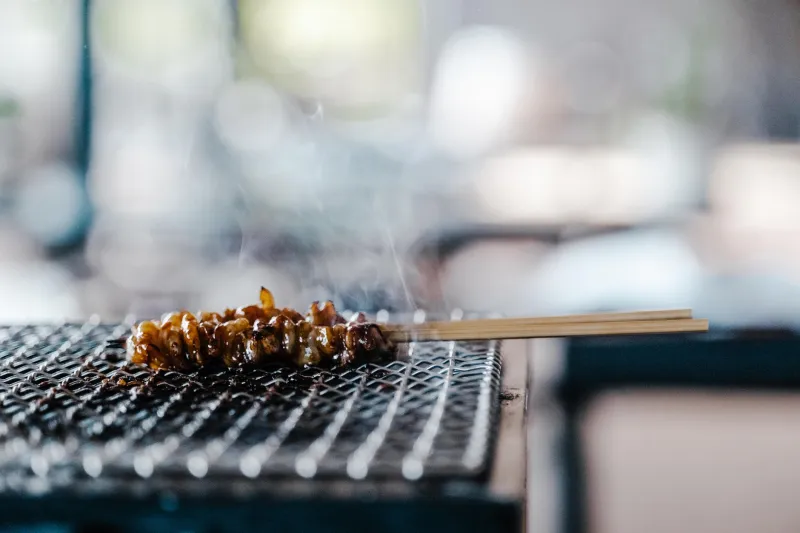
White Charcoal, Black Magic: What Japanese Binchotan Does to Your Grill That Kingsford Simply Can't
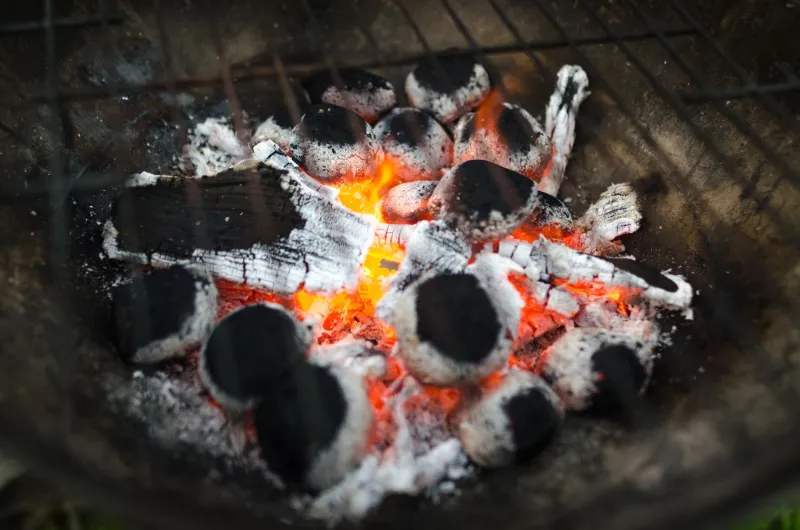
Pick up a piece of binchotan and tap two sticks together. That clean, almost crystalline clink — it sounds more like ceramic than wood. That sound is your first clue that you're holding something fundamentally different from the compressed sawdust pillow sitting in a bag at your local Home Depot.
Japanese charcoal, and binchotan in particular, has been quietly infiltrating American grilling culture for the past decade. You'll find it at high-end yakitori bars in New York and Los Angeles, behind the counter at serious Japanese BBQ restaurants, and increasingly, in the garages and backyards of home cooks who've decided that their Weber deserves better fuel. At Fuji Grill USA, we've been watching this shift happen in real time — and we wanted to understand why binchotan performs the way it does, not just that it does.
So we went deep: talked to charcoal importers, consulted with a materials chemist, and ran side-by-side grilling comparisons. Here's what we found.
What Even Is Binchotan?
Binchotan (備長炭) is a type of white charcoal — a classification that refers to the production method, not the color. It originates from the Kishu region of Wakayama Prefecture in Japan, where artisan producers have been refining the craft for over 300 years. The primary raw material is ubame oak (Quercus phillyraeoides), a dense, slow-growing hardwood that takes decades to mature.
The production process is what separates binchotan from everything else on the market. The wood is loaded into a clay kiln and fired at relatively low temperatures for an extended period — sometimes up to two weeks. Then, at the very end of the burn, the temperature is cranked dramatically, often exceeding 2,000°F (1,100°C). The charcoal is then pulled from the kiln and rapidly quenched with a mixture of ash, sand, and earth. That violent cooling process is what gives binchotan its signature silvery-white exterior and its almost metallic density.
Compare that to a standard American briquette. Briquettes are manufactured from compressed byproducts — sawdust, wood scraps, sometimes coal dust — mixed with binders like cornstarch and additives that help them light easily. They're engineered for convenience, not performance.
The Chemistry That Actually Matters
When we spoke with Marcus Lew, a charcoal importer based in San Francisco who sources binchotan directly from Wakayama Prefecture, he cut straight to it: "The carbon content is the whole story. A quality briquette might hit 70 to 75 percent carbon. Good binchotan is running 95 percent or higher. That difference changes everything about how the fuel behaves."
High carbon purity translates into several measurable advantages:
Burn temperature: Binchotan burns consistently between 1,400°F and 1,800°F (760°C–980°C) at the surface. American briquettes typically peak around 700°F–900°F before dropping off. That sustained, intense radiant heat is exactly what creates the Maillard reaction — the browning and crust development — that separates a great piece of yakitori chicken from a mediocre one.
Burn duration: A standard briquette burns out in 45 to 60 minutes. Binchotan, once properly lit, can sustain cooking heat for three to five hours. Some pitmasters report getting a second session out of the same batch by extinguishing the coals in a sealed container and relighting them the next day.
Smoke output: This is huge. Binchotan produces almost no smoke once it's fully lit. Briquettes, by contrast, off-gas throughout the entire cook — releasing volatile organic compounds, binders, and added chemicals that can impart bitter, acrid notes to your food. That clean heat is why Japanese grill masters can cook delicate fish and vegetables directly over the coals without worrying about smoke contamination.
Far-infrared radiation: This is the part that sounds a little like marketing speak but is actually backed by research. Binchotan emits a high proportion of far-infrared radiation as it burns. Far-infrared heat penetrates food more deeply than conventional convective heat, cooking proteins more evenly from the inside out while still developing surface char. It's the same principle behind professional infrared broilers — just in charcoal form.
Side-by-Side: What We Actually Tasted
We set up two identical konro grills — the compact Japanese tabletop grills that are purpose-built for binchotan — and ran a simple test: chicken thighs, salted and skewered identically, cooked over binchotan versus a premium hardwood lump charcoal (we used a well-regarded American brand, not briquettes, to give the comparison some fairness).
The binchotan grill reached cooking temperature about 20 minutes after lighting — it takes longer to get going, which is a real trade-off. But once there, the heat was remarkably stable. The chicken developed a tight, lacquered exterior with almost no flare-ups. Interior temperature climbed evenly.
The hardwood lump charcoal cooked faster in the early stages but produced noticeably more smoke, required more active management, and the crust on the chicken was less uniform — more char in spots, less in others.
In a blind taste test with four tasters, three out of four preferred the binchotan chicken. The consistent descriptor: "cleaner" flavor, with the seasoning and the meat itself coming through more clearly.
Other Japanese Charcoal Worth Knowing
Binchotan isn't the only player. Japan produces several regional charcoal varieties worth exploring:
- Ogatan — A compressed charcoal made from wood flour, often shaped into hexagonal logs. Burns longer than binchotan but at slightly lower temperatures. A good entry point for the price-conscious.
- Kishu Bincho — The premium tier of binchotan, made strictly from ubame oak in Wakayama. If a product just says "binchotan" without the Kishu designation, it may be made from other wood species or produced in other regions of Asia.
- Tosa Bincho — From Kochi Prefecture, made from oak as well. Slightly more affordable than Kishu, still excellent quality.
The Price Question
Let's be honest: binchotan is expensive. Expect to pay $25–$50 for a 2.2 lb (1 kg) box of quality Kishu binchotan, compared to maybe $1.50 per pound for hardwood lump. That's a real premium.
But the math changes when you factor in burn duration, reusability, and the fact that you're using it for precision cooking rather than long low-and-slow sessions. For grilling skewers, seafood, or anything where clean high heat matters most, binchotan is the right tool. Marcus Lew puts it this way: "Nobody complains that a good knife costs more than a cheap one. This is the same thing."
At Fuji Grill USA, we stock binchotan specifically because we believe the cooking experience it enables — that pure, radiant, smoke-free heat — is central to what authentic Japanese grilling actually is. The mountain didn't just inspire the name. It inspired the standard.