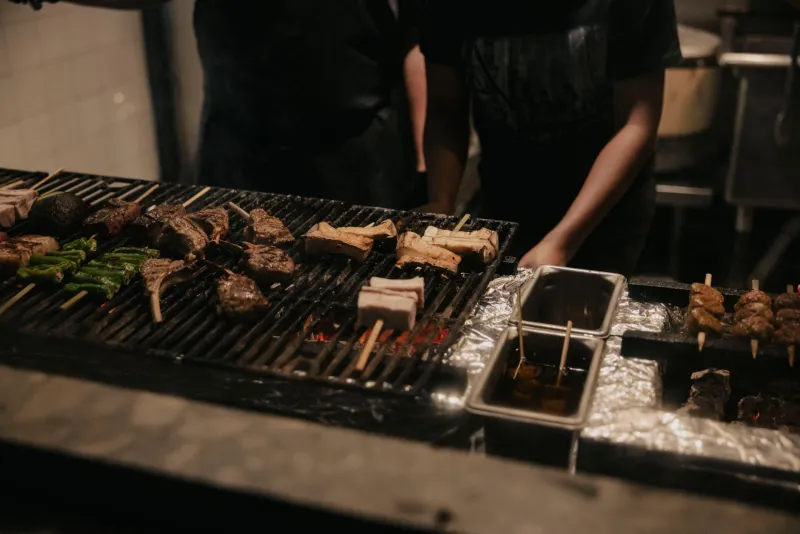
Forget the Crust: Why Japanese Grillers Chase Flavor From the Inside Out
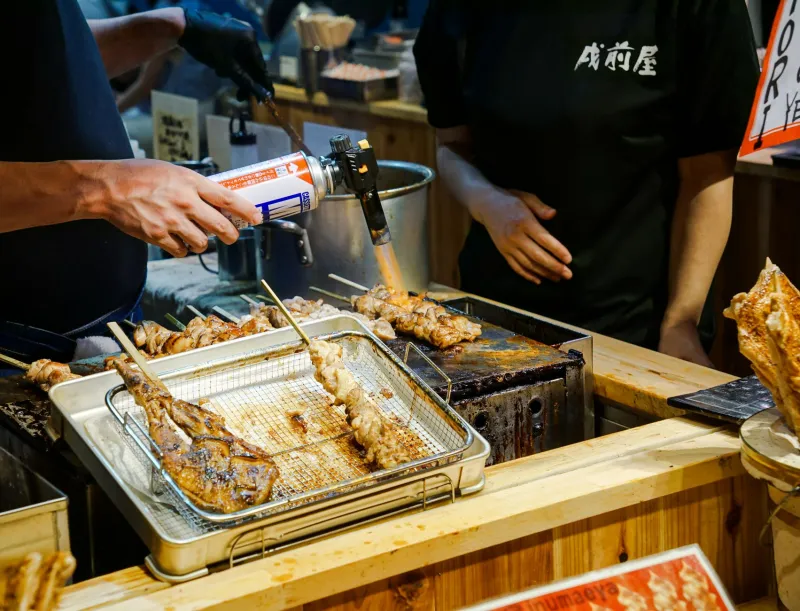
There's a moment every American backyard cook knows well. You press a piece of meat against a screaming-hot grate, hear that satisfying sizzle, and wait for that golden-brown crust to form. It smells incredible. It looks incredible. And for a long time, most of us assumed that crust was the flavor.
Japanese grillers would respectfully disagree.
Not because the crust doesn't taste good — it does. But because centering your entire technique around surface browning means you're often sacrificing something deeper, something harder to name but impossible to ignore once you've tasted it. That something is umami, and Japanese grilling has been optimizing for it for centuries.
What the Maillard Reaction Actually Does (and Doesn't Do)
Let's give credit where it's due. The Maillard reaction — the chemical process that browns meat and creates hundreds of new flavor compounds when proteins and sugars react under high heat — is genuinely remarkable. It's why a seared steak smells better than a boiled one. It's why toast is more interesting than bread. American BBQ culture has built an entire identity around coaxing it out of everything from brisket to burgers.
But here's the catch: the Maillard reaction is a surface phenomenon. It happens at temperatures above roughly 280°F, and it happens fast. The flavor it creates is concentrated in that thin outer layer — complex, yes, but also somewhat one-dimensional in the context of the whole bite. Push the heat too high or hold it too long, and you cross from Maillard territory into straight-up char, which brings bitter, acrid notes that no amount of sauce can fully rescue.
American cooking has largely accepted this tradeoff. Get the crust, manage the burn, call it done.
Japanese technique asks a different question entirely: what if you slowed everything down and let the interior of the food do more of the work?
Umami Isn't Just a Buzzword
Umami — often described as the fifth taste alongside sweet, salty, sour, and bitter — is the flavor of glutamates. It's that deep, savory, mouth-coating sensation you get from aged cheese, soy sauce, dried mushrooms, and yes, properly grilled meat. It's not sharp or immediate like salt. It lingers. It rounds out other flavors and makes everything feel more complete.
Here's what most American cooks don't realize: umami compounds in meat develop and concentrate most effectively at moderate, sustained temperatures, not at the scorching-hot levels needed for aggressive Maillard browning. When you blast a piece of chicken over a raging fire to get that char fast, you're essentially rushing past the temperature window where glutamates are doing their best work.
Japanese yakitori masters and robata grillers have known this intuitively for generations. Their setups — including the kind of precision charcoal arrangements we've built our equipment around at Fuji Grill USA — are specifically designed to maintain consistent medium heat, not to generate maximum surface sear. The goal is to coax flavor out gradually, letting the natural glutamates in the meat (and in any marinades or tare sauces applied during cooking) develop fully before the outside takes on color.
The Temperature Discipline That Changes Everything
This is where the practical gap between Western and Japanese grilling technique becomes most obvious.
In most American BBQ contexts, heat management means toggling between "high" and "low" — blast it to get the crust, then back off to cook through. Japanese grilling is more like a sustained conversation with the fire. Binchotan charcoal, which burns hotter and more evenly than conventional briquettes, makes this easier because it radiates consistent infrared heat without the dramatic flare-ups that force reactive adjustments.
The technique itself involves holding food at a distance that keeps it in a moderate heat zone — warm enough to drive out moisture gradually and concentrate flavor, but not so hot that the surface races ahead of the interior. Cooks rotate constantly, watching for subtle color changes and listening for shifts in the sizzle. They're not waiting for a crust. They're listening for the moment the food tells them it's ready.
The result is meat and vegetables that are deeply flavorful throughout, not just on the outside. The surface has color and texture, sure, but it's a byproduct of thorough cooking rather than the primary objective.
Why American Pitmasters Are Starting to Pay Attention
Over the last few years, something interesting has been happening in professional BBQ circles across the US. Pitmasters who built their reputations on smoke rings and bark are quietly experimenting with Japanese techniques — not abandoning their roots, but borrowing ideas that their traditional training never covered.
The shift tends to start with a single experience: eating yakitori or robata-grilled food prepared by someone who actually knows what they're doing. The flavor is startlingly different. Not better in a flashy way, but deeper. More coherent. Less reliant on sauce or seasoning to do the heavy lifting.
Once you taste food where the umami has been fully developed rather than partially sacrificed for surface texture, it's hard to go back to optimizing purely for crust.
How to Start Shifting Your Own Approach
You don't need to overhaul your entire setup to start applying these principles. A few adjustments go a long way:
Lower your default temperature. Most American home grillers run hotter than they need to. Try pulling your food further from the coals and extending your cook time. You'll be surprised how much more flavor develops when you stop racing.
Apply umami-rich ingredients early. Soy-based marinades, miso, and sake work best when they have time to penetrate and interact with the meat's natural glutamates during cooking — not just as a last-minute glaze. Brush on tare sauce in multiple thin layers throughout the cook rather than once at the end.
Rotate more, flip less. Constant, gentle rotation keeps heat exposure even and prevents the surface from getting ahead of the interior. It feels fussy at first, but it becomes instinctive quickly.
Resist the urge to crank the heat for color. If your food isn't browning fast enough, the answer isn't usually more heat — it's more patience. Color will come. Flavor needs time.
The Bigger Mindset Shift
At its core, the difference between Maillard-first and umami-first grilling is a difference in values. Western BBQ tends to prioritize the dramatic and the visual — the bark, the crust, the smoke ring you can see in a cross-section. Japanese grilling prioritizes the experience of actually eating the food, which means optimizing for what happens in your mouth rather than on a plate.
Neither approach is wrong. But if you've ever finished a meal of perfectly charred ribs and felt like something was missing — some depth, some complexity that the smoke and the crust didn't quite deliver — it might be worth asking whether you were cooking for the right goal.
At Fuji Grill USA, this philosophy is baked into everything we make and everything we teach. The fire is just the beginning. What you do with it — how patiently, how precisely, how intentionally — is where the flavor actually lives.