Grocery Store Cuts, Michelin-Star Flavor: The Japanese Grilling Secrets That Make Budget Beef Shine
Let's be honest about something. Most of us aren't dropping $45 on a ribeye every weekend. We're grabbing what's on sale, eyeing the markdown stickers, and hoping some combination of seasoning and fire will carry us across the finish line. Sometimes it does. Often, it doesn't.
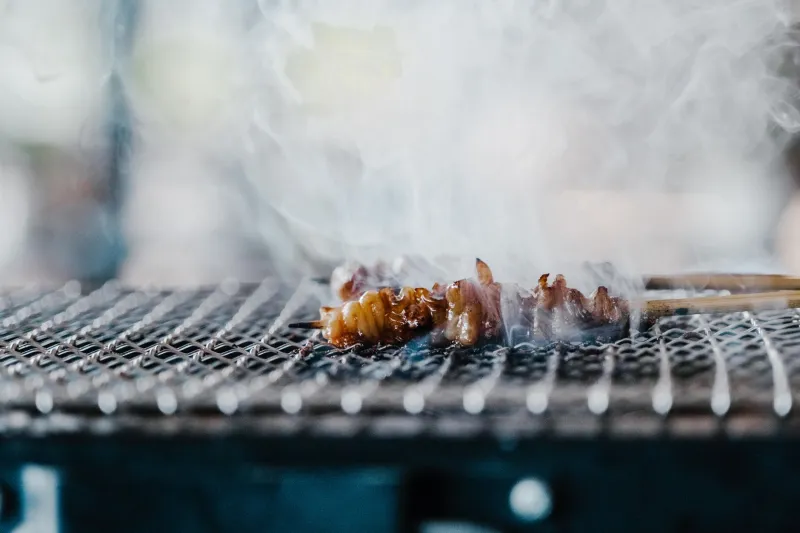
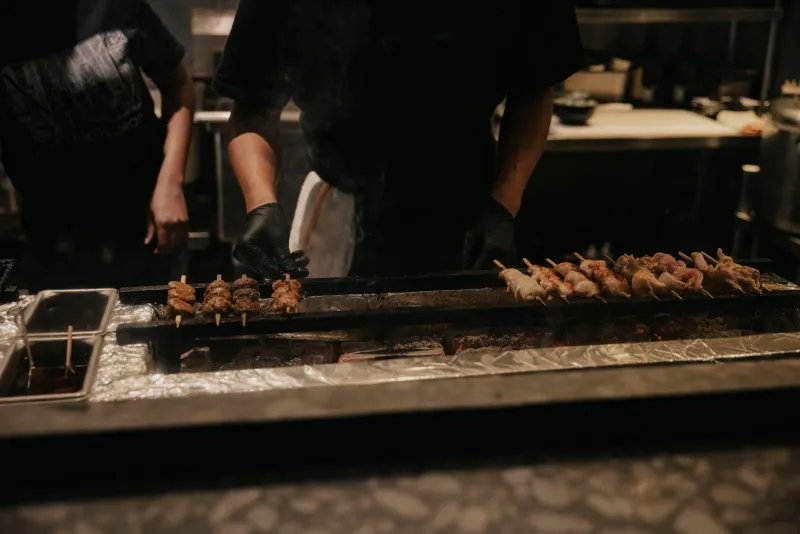
But here's what's interesting: Japanese grilling culture was never really built around premium cuts to begin with. Yakitori stalls in Tokyo's back alleys have been making chicken gizzards and beef offcuts taste extraordinary for generations. Robatayaki restaurants built entire reputations on humble ingredients cooked with uncommon precision. The secret was never the meat. It was always the method.
So let's break that method down — practically, specifically, and in a way you can actually use this Saturday.
Why Cheap Cuts Have More Potential Than You Think
First, a quick mindset shift. When American grillers reach for budget cuts — chuck steak, beef short ribs, chicken thighs, pork shoulder — they often treat them as second-tier ingredients that need to be compensated for. More marinade. Longer cook times. Heavy sauces to mask what's underneath.
Japanese technique flips this entirely. Cuts with more connective tissue, more fat marbling, and more muscle activity are actually richer in glutamates — the compounds responsible for umami, that deep savory satisfaction that makes you keep eating. The problem with cheap cuts isn't that they lack flavor. It's that most Western grilling methods don't know how to unlock it.
High, radiant heat applied at the right distance and the right moment does something that a gas grill on full blast simply can't replicate: it creates a rapid Maillard reaction on the surface while leaving the interior moist, concentrating those glutamates into a caramelized crust that tastes dramatically more complex than the raw ingredient would suggest.
The Binchotan Factor
This is where charcoal becomes a genuine game-changer, not just a talking point. Japanese white charcoal — binchotan — burns hotter and cleaner than standard briquettes, with almost no smoke and a steady, radiant heat output that hovers around 1,400–1,600°F at the surface. That's significantly more intense than most backyard setups.
For budget cuts, this matters enormously. A beef chuck flat iron, for example, has great flavor but can turn chewy and dull if it lingers over moderate heat. Over binchotan, properly positioned, that same steak develops a crackling crust in under two minutes per side — sealing in moisture, accelerating the Maillard reaction, and producing the kind of char-edged, juicy result you'd normally associate with a much more expensive cut.
You don't have to go all-in immediately. Even mixing a small amount of binchotan into your standard charcoal setup raises the heat ceiling noticeably. Start there and see what changes.
Thin Slicing: The Technique Nobody Talks About Enough
One of the most underappreciated moves in Japanese grilling is also one of the simplest: cut thinner.
Yakitori skewers work partly because small, bite-sized pieces of meat cook faster and more evenly, giving the high heat less time to dry out the interior. The same logic applies to steaks and larger cuts. A chuck steak sliced to about half an inch — against the grain — grills in under four minutes total and delivers a surface-to-interior ratio that maximizes crust while keeping the center tender.
This is essentially what yakiniku restaurants do. Those paper-thin beef slices aren't just about portion control or presentation. They're a deliberate technique to get maximum Maillard development on every single bite, rather than a thick slab where only the outside edges get the good stuff.
Try it this weekend with whatever beef you have on hand. Slice thinner than feels comfortable, grill hotter than feels safe, and pull faster than feels right. The results will surprise you.
Tare: The Flavor Amplifier That Costs Almost Nothing
If binchotan is the hardware upgrade, tare is the software. Traditional yakitori tare — a reduced blend of soy sauce, mirin, sake, and a touch of sugar — is one of the most efficient flavor delivery systems ever developed. It's applied in thin coats during the final minute or two of grilling, each pass caramelizing slightly over the heat and building a lacquered, savory-sweet glaze that amplifies whatever umami the meat already has.
For budget cuts, this is transformative. A chicken thigh finished with three light tare passes over high heat doesn't taste like a chicken thigh anymore. It tastes intentional. Layered. The kind of thing people ask you to make again.
The base recipe is forgiving and cheap: equal parts soy and mirin, half part sake, a small spoonful of sugar. Simmer until slightly thickened. That's it. You can make a jar for under $4 that will last weeks in the fridge and make everything it touches taste better.
Heat Zoning for Cheaper Cuts
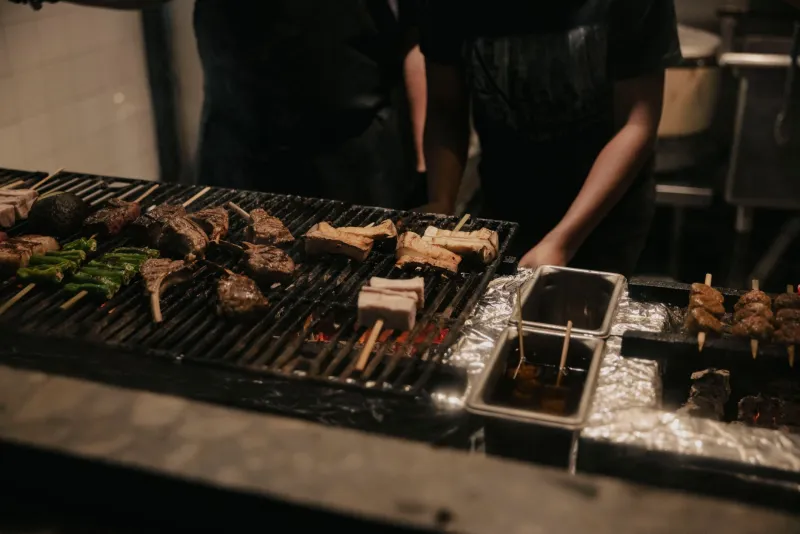
One of the core principles of robata grilling is working multiple heat zones simultaneously — a concept that's especially useful when dealing with cuts that have uneven fat distribution or varying thickness.
Set up your charcoal so you have a screaming-hot zone on one side and a moderate zone on the other. Start budget cuts like short ribs or bone-in chicken pieces over the hot zone for initial searing — two minutes, maybe three — then move them to the moderate zone to finish cooking through without burning. This two-stage approach mimics what professional robata cooks do instinctively, and it solves the biggest problem with cheap cuts: the outside burning before the inside is done.
A simple cast-iron grate or a Fuji-style konro setup makes this kind of zone management much easier than a standard kettle grill, because the compact design lets you shift skewers or small cuts just a few inches to dramatically change the heat exposure.
Side-by-Side: The Same Cut, Two Methods
Here's a quick comparison worth running in your own backyard:
Take two pieces of the same beef chuck steak. Cook one the standard American way — medium-high gas grill, eight to ten minutes, flip once, maybe some salt and pepper. Cook the other using thin-sliced yakitori logic: thinner cut, binchotan or high-temp charcoal, two minutes per side maximum, finished with two tare passes.
The difference is not subtle. The first will taste like a decent budget steak. The second will taste like something you'd pay $18 for at a Japanese restaurant in your city. Same beef. Same price. Completely different result.
The Bottom Line
Japanese grilling techniques weren't developed to showcase expensive ingredients. They were developed to make the most of whatever was available — to coax maximum flavor from modest cuts through precision, heat management, and a few well-chosen condiments.
That's exactly the kind of cooking most American home grillers actually need, even if the marketing around premium cuts and fancy rubs has convinced them otherwise. You don't need better beef. You need better technique.
The good news? The technique is learnable, the equipment is accessible, and the results show up the very first time you try it. Start with a flank steak, a bag of quality charcoal, and a small jar of homemade tare. See what happens. We're pretty confident you'll be slicing thinner and grilling hotter for the rest of the summer.