Fast Fire, Big Flavor: How Yakitori Is Humbling America's Most Dedicated Pitmasters
Dave Kowalski has been smoking briskets since before most people knew what a pellet grill was. He's the kind of guy who sets a 4 a.m. alarm to tend his fire, tracks internal temps on a spreadsheet, and genuinely believes that patience is the most important ingredient in any cook. So when his neighbor — fresh off a trip to Osaka — handed him a skewer of thigh meat that had been over hot coals for maybe twenty minutes, Dave did something he almost never does.
He asked for seconds.
"I didn't want to admit it," he laughs now. "But that chicken was better than anything I'd pulled off my smoker in years. Juicier. More complex. And the guy hadn't even broken a sweat."
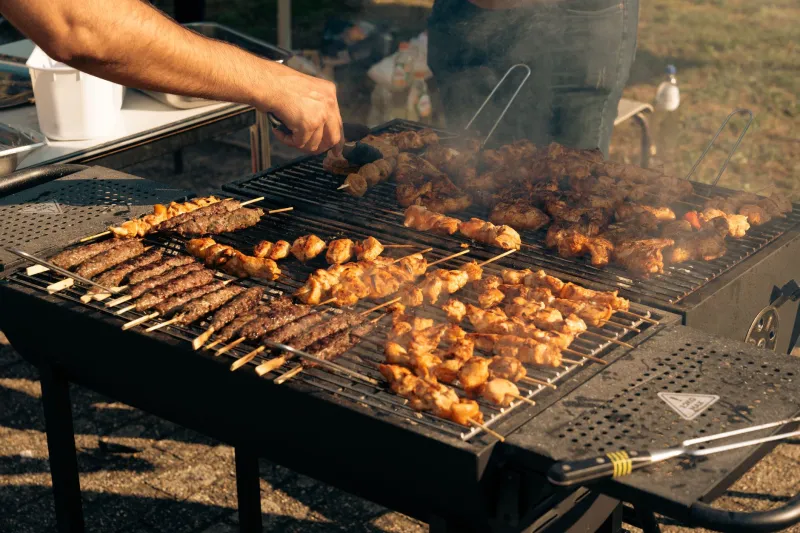
Dave isn't alone. Across the country, a quiet reckoning is happening in backyards and competition pits alike. American pitmasters — people who have built entire identities around the long, slow, smoke-heavy traditions of Southern BBQ — are encountering yakitori for the first time and walking away genuinely shaken. Not because the technique is flashy or trendy, but because it works. Remarkably, almost unfairly well.
The Mythology of the Long Cook
Let's be honest about something: in American grilling culture, time has always carried moral weight. The 12-hour brisket isn't just a cooking method — it's a statement. It says I care. I sacrifice. I take this seriously. The longer the cook, the more street cred attached to it. There's a whole language built around it: the stall, the wrap, the rest. Mastering these rituals is how you earn your place at the serious griller's table.
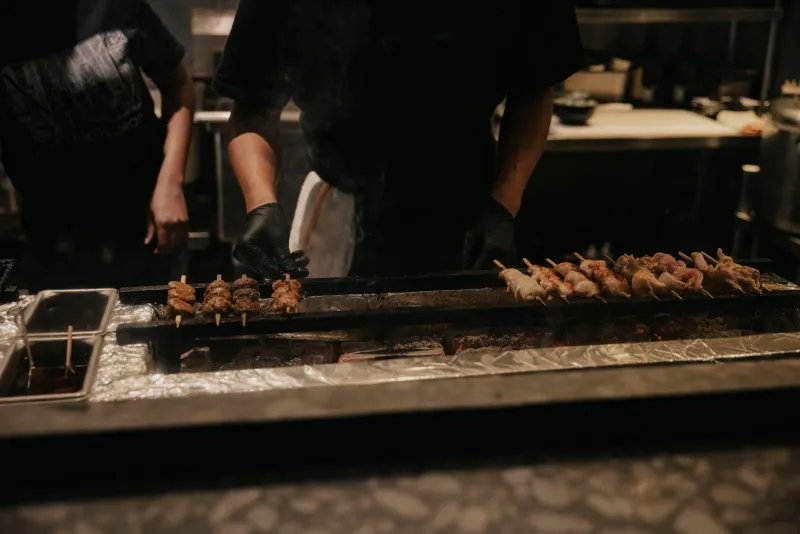
Yakitori asks a completely different question. Instead of how long can you wait, it asks how precisely can you act. The Japanese approach to grilling chicken — and yakitori is, at its core, just that — strips everything back to fundamentals. Small cuts of meat. Intense, direct heat from high-quality charcoal. Constant, attentive movement. The cook isn't waiting for time to do the work. The cook is the work.
This is a genuinely uncomfortable idea for anyone who has spent years treating patience as a proxy for skill.
What Precision Actually Looks Like
Here's what converts tend to notice first when they start cooking yakitori seriously: the margin for error is tiny, and that's exactly the point.
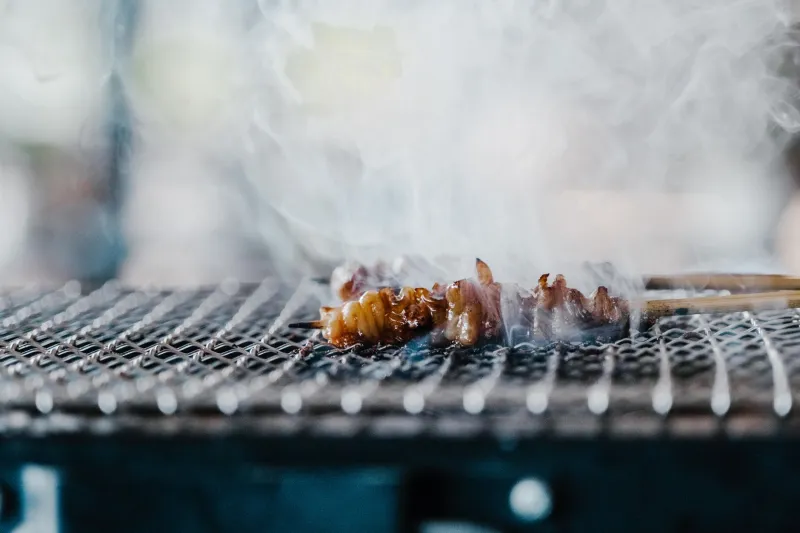
With a 12-hour low-and-slow cook, you have buffer. The meat is forgiving. You can step away, grab a beer, check the game. The process is designed to accommodate human imperfection over a long timeline. Yakitori gives you none of that cushion. A skewer of chicken thigh over properly hot binchotan charcoal can go from perfect to overdone in sixty seconds. You have to be present. You have to read the fire, watch the fat render, listen for the sizzle to shift.
Pitmasters who've made the crossover describe it almost like switching sports. "Low-and-slow is like marathon running," says Marcus Hill, a competition BBQ veteran from Memphis who started incorporating yakitori into his catering menu two years ago. "Yakitori is like sprinting. Totally different muscle groups. Different mindset. And honestly? The sprinting made me a better marathon runner, too. I started paying attention to things I'd been ignoring for years."
That attention — to heat zones, to the Maillard reaction happening in real time, to moisture loss and fat behavior — is exactly what the yakitori philosophy forces you to develop. And once you develop it, you can't un-see it.
The Heat Is the Teacher
One of the biggest technical lessons yakitori delivers is a masterclass in heat management that most American grillers simply never get. Traditional charcoal BBQ culture does involve fire management, sure. But it's usually about sustaining a consistent low temperature over many hours — a completely different challenge than building, reading, and working multiple heat zones over a short, intense cook.
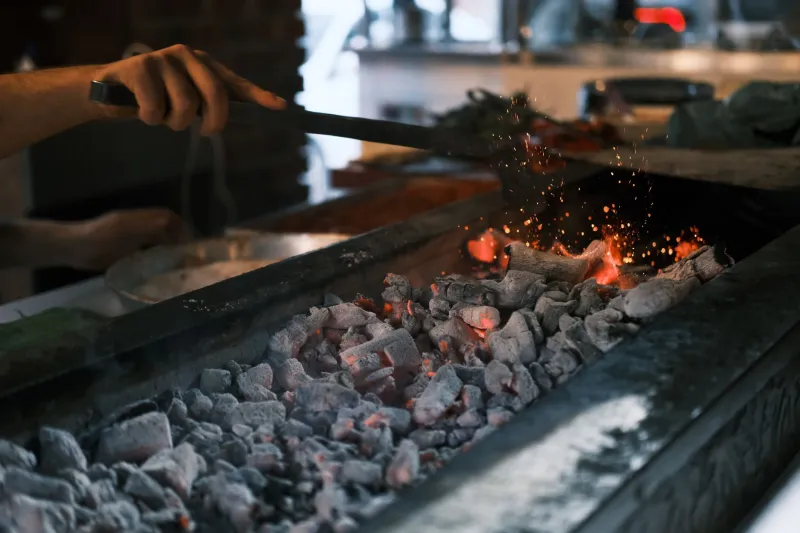
Japanese yakitori chefs traditionally use binchōtan — a dense, ultra-pure hardwood charcoal that burns hotter and cleaner than anything most Americans have worked with. It produces radiant heat rather than open flame, which means you get deep, even penetration into the meat without the char-and-flare cycles that plague conventional grilling. When you cook over binchōtan for the first time, the heat feels almost surgical.
That surgical quality changes how you think about fire. You stop seeing it as something to manage from a distance and start treating it as a precision tool. Pitmasters who've made the switch say this fundamentally rewired their instincts — not just for yakitori, but for every cook they do afterward.
"I came back to my smoker with completely different eyes," says Hill. "I started thinking about heat like a yakitori chef. Where's the hot zone? Where's the rest zone? What is this particular piece of meat actually asking for right now? That's not how I used to think. That's a yakitori habit."
Thirty Minutes and Nothing to Hide Behind
There's another dimension to this that nobody talks about enough: yakitori is ruthlessly honest. When you smoke a brisket for twelve hours, the process itself adds layers of complexity — smoke flavor, bark development, collagen breakdown — that can compensate for a lot of sins. A mediocre cut of meat can become genuinely good through the alchemy of time and smoke.
Yakitori doesn't offer that cover. In thirty minutes over high heat, the quality of your ingredient is completely exposed. The freshness of the chicken, the balance of your tare (the basting sauce), the precision of your heat management — all of it is right there on the skewer, nowhere to hide. This is simultaneously terrifying and liberating for cooks who are used to the long game.
"It taught me to care about sourcing in a way I never had to before," says Kowalski. "When you're smoking for twelve hours, you've got room to work with. When you're doing yakitori, you need good chicken. Full stop. That changed how I shop, how I think about ingredients. It made me a more serious cook, not a less serious one."
Redefining What 'Serious' Grilling Means
Maybe that's the real shift yakitori is driving in American BBQ culture — a renegotiation of what it actually means to take grilling seriously. For a long time, seriousness was measured in hours, in equipment investment, in elaborate ritual. Yakitori proposes a different metric: depth of attention, quality of technique, and respect for the ingredient in front of you.
You don't have to choose one over the other. The best grillers coming up right now are fluent in both traditions — they can run a brisket overnight and pivot to a perfect skewer of negima at a moment's notice. The Japanese approach doesn't replace American BBQ. It expands the vocabulary.
But if you've never tried yakitori, never felt the specific intensity of cooking over proper charcoal with nothing but a skewer and your instincts between you and the fire — you're missing something. Something that might just make you better at everything else you cook.
Dave Kowalski still sets his 4 a.m. alarm. He still loves the long smoke. But these days, he keeps a narrow konro grill on the side of his deck, binchōtan always at the ready.
"Thirty minutes," he says. "Thirty minutes and you're eating something extraordinary. I used to think that was cheating. Now I think it's just confidence."