Built Like a Mountain, Burns Like a Dream: The Geometry Secret Behind Japan's Most Efficient Grills

Most American backyard grills are basically boxes. Rectangular, flat-bottomed, wide-open boxes. And for a lot of what we cook — burgers, brats, chicken thighs — they do the job fine. But once you start digging into why Japanese grilling produces such consistently precise, even, deeply flavored results, you keep coming back to the same answer: shape.
Not technique. Not charcoal (though that matters too). Shape.
The traditional Japanese konro and many regional hearth-style grills share a design philosophy that's quietly radical: they narrow toward the base, slope inward along the sides, and concentrate heat in a way that flat-bottomed Western grills simply don't. It's not a coincidence that Mount Fuji — the most iconic natural landmark in Japan — looks a lot like the profile of these grills when you set one on its end. The parallel runs deeper than aesthetics.
Why a Volcano Makes a Perfect Heat Engine
Fuji isn't just a pretty mountain. It's a stratovolcano, and its conical shape is the result of thousands of years of material building upward and outward from a central vent. Heat and pressure from below get directed upward through a narrowing channel — which is exactly what a well-designed Japanese grill does with your charcoal.
When the firebox tapers toward the bottom, a few things happen simultaneously. First, the charcoal bed sits in a tighter, more concentrated space, which means the coals are closer together and burn more efficiently. Less air escapes sideways; more of it gets pulled upward through the fuel. Second, the sloped walls act as natural reflectors, bouncing radiant heat back toward the center of the cooking zone rather than letting it bleed off into the open air. Third — and this is the part most American grillers never think about — the narrowing geometry creates a mild but consistent convective current that keeps hot air moving in a controlled loop rather than just venting randomly.
The result is a grill that runs hotter with less fuel, holds temperature more steadily, and gives the cook more predictable control over what's happening above the coals.
The Flat-Bottom Problem Nobody Talks About
Here's the thing about a wide, flat firebox: it's incredibly forgiving, which is exactly why American grill manufacturers love it. You can pile charcoal anywhere, light it unevenly, and still get something cooking. But forgiving and precise are not the same thing.
In a flat-bottomed grill, heat rises in broad, diffuse columns. Hot spots develop wherever the charcoal happens to pile up. Cool zones form near the edges. The walls of the firebox are far enough from the fuel that they absorb heat rather than reflect it back. You end up managing a chaotic system, constantly moving food around to compensate for temperature variance that the grill's own geometry is creating.
Japanese grill design treats the firebox as an active participant in heat management, not just a container. The slope does work. The shape earns its place.
Where This Design Came From
The roots of mountain-profile grilling in Japan stretch back centuries, long before anyone was thinking about BTUs or convective airflow. Early Japanese cooking hearths — called irori — were recessed into the floor and surrounded by sloped earth or stone walls that naturally concentrated heat upward. Over time, portable versions evolved that mimicked this geometry in ceramic and clay, which conducted and retained heat in ways that metal alone couldn't replicate.
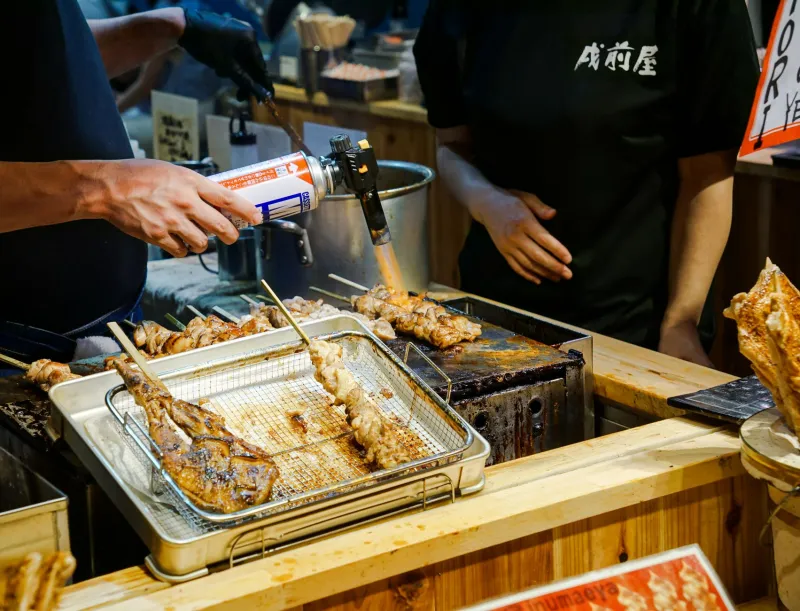
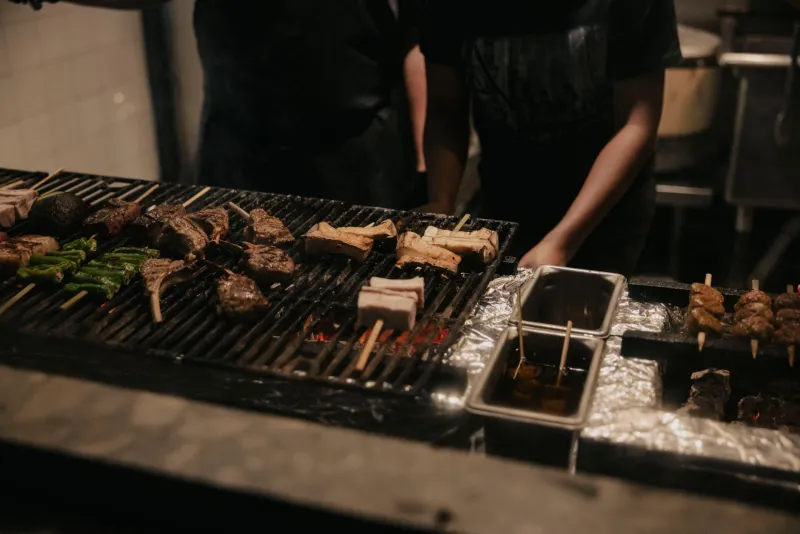
The konro, which became a staple of yakitori culture, refined this further. Ceramic konros are typically narrow, deep, and slightly tapered — designed to hold binchotan charcoal in a tight column so that the intense, even heat of white charcoal could be used to its full potential. The shape and the fuel evolved together, each making the other work better.
When you grill on one of these setups, even for the first time, you notice the difference immediately. The heat feels more focused. The smoke rises in a cleaner column. You find yourself making fewer adjustments because the grill is doing more of the work for you.
What American Home Cooks Can Actually Do About It
You don't necessarily need to replace your existing grill to start benefiting from mountain-geometry principles. There are a few practical ways to retrofit or adapt what you already have.
Raise and concentrate your coal bed. Instead of spreading charcoal across the full width of your firebox, pile it into a mound in the center — highest in the middle, sloping down toward the edges. You're manually creating the geometry the grill doesn't have. It won't be as efficient as a purpose-built tapered firebox, but it will concentrate heat upward more effectively than a flat spread.
Use a charcoal chimney as a vertical heat column. If you have a kamado-style grill or a deep kettle, placing a fully loaded chimney starter inside the firebox (after lighting, obviously) and grilling directly over it creates a surprisingly focused heat zone. The cylindrical shape of the chimney mimics the narrowing column effect.
Add ceramic or fire brick inserts. Lining the lower walls of a wide firebox with angled fire bricks creates artificial slopes that reflect heat back toward the center. It takes some experimentation to get the angle right, but even a modest inward lean makes a measurable difference in how evenly the heat distributes.
Invest in a purpose-built konro. If you're serious about this, the most straightforward solution is to add a Japanese-style konro to your setup. They're available in ceramic and stainless versions, designed from the ground up around the mountain geometry principle, and they pair perfectly with binchotan for the kind of clean, consistent heat that makes yakitori and other skewer-based cooking feel effortless.
Shape Is a Decision, Not an Accident
Every design choice in a grill is an engineering decision that affects what happens to your food. American grill culture has historically optimized for volume — how much can you cook at once, how fast can you get it done. Japanese grill design optimized for precision — how consistently can you manage heat, how much can you coax out of a small amount of fuel.
The mountain shape is the clearest expression of that philosophy. It's not decorative. It's not cultural nostalgia. It's a solution to the same problem every grill cook faces: heat is hard to control, and the geometry of your firebox either helps you or fights you.
Fuji didn't become Japan's most iconic peak because it's tall. It became iconic because its shape is so perfectly, unmistakably intentional-looking — even though it was made by fire and pressure and time. The best Japanese grills carry that same quality. They look like they couldn't be any other shape.
Once you cook on one, you'll understand why.