From Flat Top to Fire Pit: How Japanese Robata Bars Are Quietly Rewriting the American Restaurant Playbook
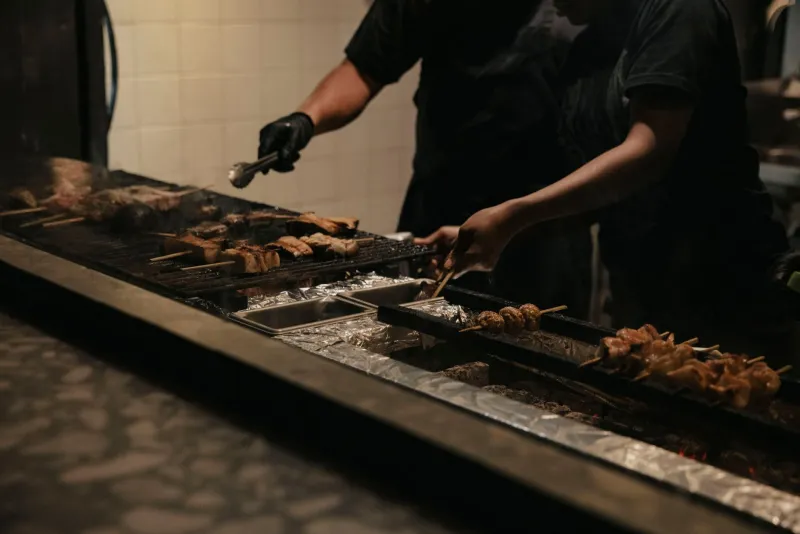
Walk into the right restaurant in Chicago, Austin, or Portland these days and you might notice something different. The familiar sizzle of a flat-top griddle is gone. Instead, there's a low, amber glow behind the counter, a faint cedar-and-char perfume in the air, and a chef crouching over a long, open robata grill like she's tending a campfire that also happens to be producing some of the best food you've ever eaten.
This isn't a gimmick. It's a full-on operational pivot — and it's spreading faster than most food writers have caught on to.
The Flat Top's Quiet Decline
For decades, the commercial flat top griddle was the workhorse of American restaurant kitchens. Consistent, controllable, easy to clean. It made sense for high-volume service. But somewhere along the way, diners started wanting more than consistency. They wanted experience. They wanted to watch their food cook. They wanted smoke, drama, and the kind of depth of flavor you simply cannot fake with a steel plate and an electric coil.
Enter the robata grill.
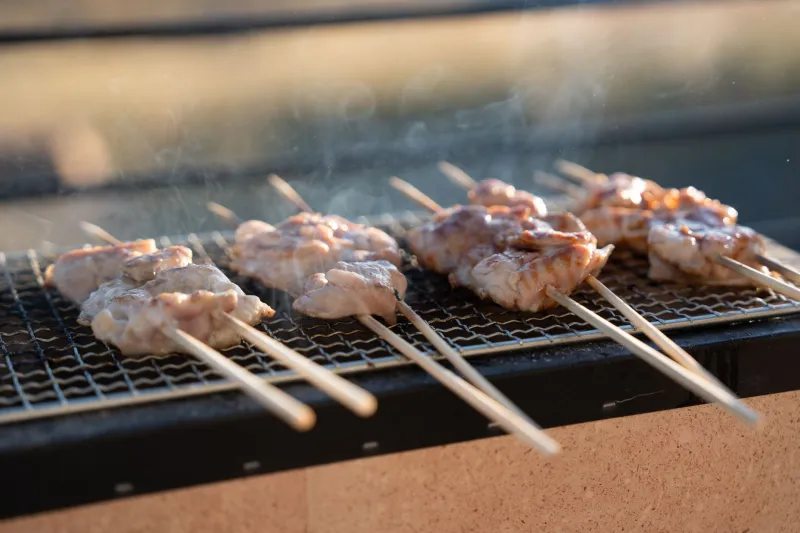
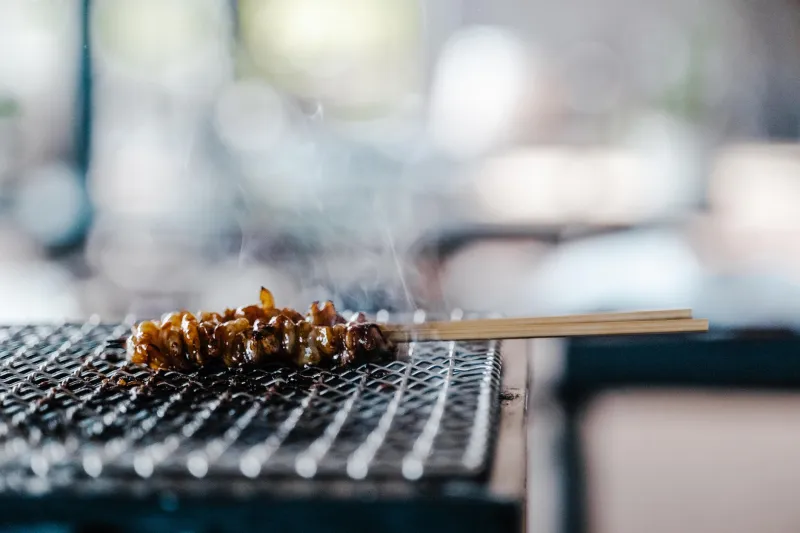
Robata — short for robatayaki, which translates roughly to "fireside cooking" — originated in the fishing villages of northern Japan. Fishermen would gather around a central hearth, grilling the day's catch over low, sustained heat. The style eventually migrated to Tokyo's izakayas and high-end kaiseki restaurants, where it was refined into something almost meditative: a chef, a fire, and an ingredient treated with absolute respect.
American chefs started paying attention. And now, they're converting.
Chefs Who Made the Jump
Take Marcus Delray, executive chef at Ember & Pine in Nashville. Two years ago, his kitchen ran three flat tops during peak service. Today, he runs one — and a custom robata bar that seats eight guests directly in front of the coals.
"I fought it at first," Delray admits. "You're talking about ripping out equipment that works, retraining your whole line, and betting that your guests are going to care about the difference. That's a scary ask."
But the results changed his mind fast. "The first time I grilled our heritage pork belly over binchōtan on that robata, I tasted something I'd never gotten off a flat top. It wasn't just the char. It was this deep, almost sweet smokiness that came from the fat rendering slowly over radiant heat. My sous chef literally stopped what she was doing and said, 'What is that?'"
Delray isn't alone. Across the country, a growing cohort of chefs — many of whom trained in Japan or worked under Japanese-influenced mentors — are describing the same revelation. The robata doesn't just cook food differently. It makes you think about food differently.
In Los Angeles, Chef Yuki Tanaka of Hinoki Social has built her entire menu concept around a custom 12-seat robata bar imported from Osaka. "In Japan, the grill is the center of the room," she explains. "The chef isn't hiding in the back. You're performing, you're communicating with guests, you're reading the fire in real time. That relationship changes everything — for the cook and for the person eating."
The Operational Headaches (And Why They're Worth It)
Let's be honest: switching from a flat top to a robata setup is not a casual decision. There are real challenges, and chefs who've made the transition are refreshingly upfront about them.
Ventilation is the first hurdle. Robata grills produce significant smoke, and most American commercial kitchens weren't designed with live-fire Japanese cooking in mind. Several restaurateurs we spoke with described expensive hood upgrades and lengthy conversations with local fire marshals before their first coal ever lit.
Fuel sourcing is another issue. Authentic robata cooking relies heavily on binchōtan — the dense Japanese white charcoal prized for its long, even burn and near-smokeless combustion. Until recently, sourcing quality binchōtan in the US was a logistical headache. Prices were high, supply was inconsistent, and most American distributors had no idea what chefs were actually asking for.
That's changing. Specialty importers have expanded their networks, and brands like Fuji Grill USA have made it significantly easier for American restaurants to get their hands on the equipment and the fuel that makes robata cooking work the way it's supposed to.
Staff training is the third challenge — and arguably the most important. Robata cooking demands a fundamentally different skill set than griddle work. You're managing live coals, reading radiant heat, and making real-time adjustments based on what you see and smell rather than what a dial tells you. "It took my team about three months to really feel comfortable," says Delray. "But now they don't want to go back. There's something about cooking with fire that makes the job feel meaningful again."
What It's Doing to Menus
Here's where things get genuinely exciting from a culinary standpoint. The robata bar isn't just a different way to cook the same food. It actively opens up new menu territory.
Vegetables are the surprise star of the robata revolution. Ingredients that tend to turn soggy or flat on a griddle — eggplant, king oyster mushrooms, whole scallions, baby bok choy — transform over robata heat. The high-but-indirect radiant warmth caramelizes without burning, concentrating flavors in ways that feel almost magical to diners used to steakhouse-style sides.
Fish and shellfish have also gotten a second life. "Oysters on a flat top are fine," says Tanaka. "Oysters on a robata are something else entirely. The smoke hits the brine, the shell holds the heat, and you get this incredibly complex flavor that I genuinely cannot replicate any other way."
Even proteins that seem counterintuitive — chicken thighs, pork cheeks, delicate fish collars — are finding their best expressions over robata coals. The low, sustained heat allows connective tissue to break down gradually while maintaining moisture, producing textures that would be nearly impossible to achieve on a flat top.
What Diners Are Actually Noticing
Restaurant operators are quick to point out that the robata bar isn't just a kitchen upgrade. It's a front-of-house transformation.
Diners are leaning in — literally. The open-fire format invites curiosity. Guests ask questions. They watch the process. They smell the food cooking before it arrives at the table. That multi-sensory engagement is creating a level of dining investment that's hard to manufacture any other way.
"Our average check time went up after we installed the robata bar," notes one Portland restaurateur who asked to remain anonymous. "People aren't rushing. They're sitting there watching the coals. They're ordering another round of drinks because they're having a genuinely good time just being in the room."
The Bigger Picture
The robata movement in American restaurants isn't just a trend. It's a signal about where dining culture is heading. Guests increasingly want to understand what they're eating and how it was made. They want transparency, craft, and a reason to be present at the table rather than just consuming a meal.
Japanese grilling culture — patient, fire-forward, deeply ingredient-focused — offers all of that. And as more American chefs discover what's possible when you replace a flat top with a properly built robata bar, the question stops being why would you make the switch and starts being why did it take this long.
The coals are lit. The shift is already underway.