Your Nose Knows: Training Your Sense of Smell to Grill Like a Tokyo Master
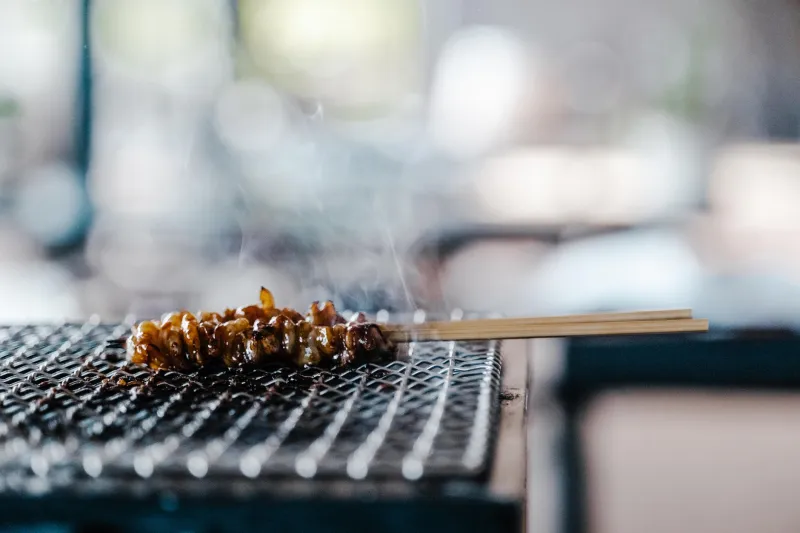
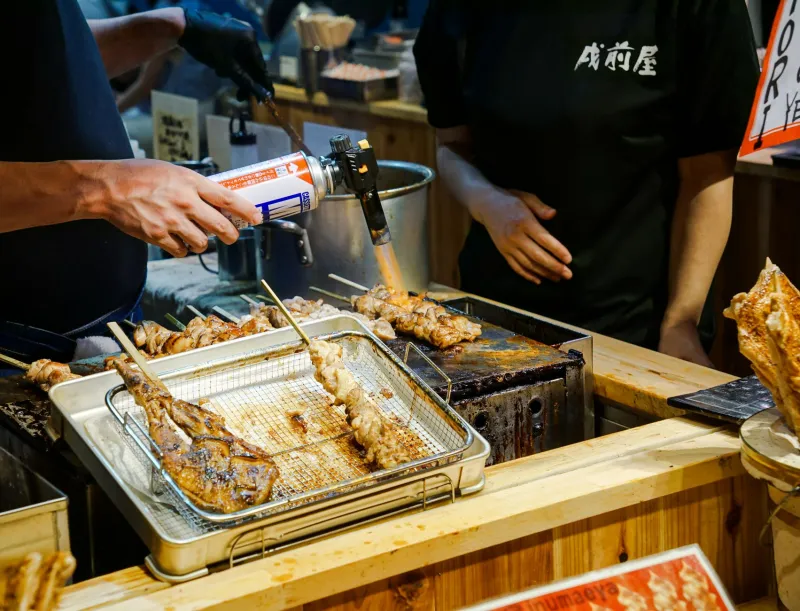
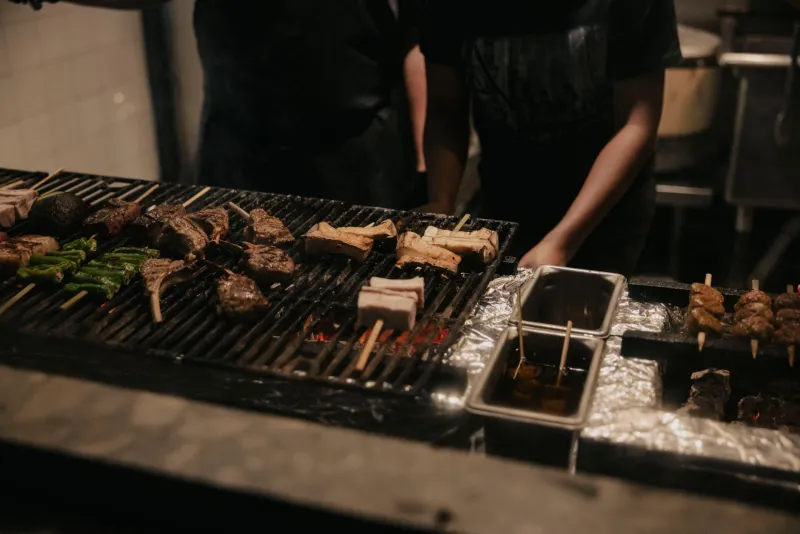
There's a moment — maybe thirty seconds before a piece of chicken thigh hits its sweet spot on the grill — when the air changes. It's subtle. The sharp, almost mineral edge of hot binchotan softens. A rounder, deeper smell rolls in, something between caramel and savory broth. In a back-alley yakitori spot in Shinjuku, that shift is all a seasoned grill master needs. The skewer gets rotated. The timing clicks into place.
No thermometer. No timer. Just the nose.
American grilling culture has spent decades leaning hard on visual and tactile cues — grill marks, internal temp, the poke test. And those tools aren't wrong. But they're incomplete. Japanese grill tradition, particularly in the world of yakitori and robatayaki, treats smell as a primary sense, not a backup signal. Learning to do the same doesn't require flying to Japan. It just requires slowing down and paying attention.
Why Scent Works as a Doneness Indicator
Here's the science, kept simple: as proteins and fats heat up, they go through a cascade of chemical reactions. Maillard reactions (the browning that creates savory complexity), fat rendering, collagen breakdown, moisture evaporation — each of these stages releases distinct volatile aromatic compounds. Your nose picks those up faster than your eyes can register a color change and way faster than a thermometer can stabilize.
Japanese grill culture figured this out empirically, over centuries, long before food scientists had names for any of it. The result is a deeply intuitive system where the cook's attention is tuned to the air around the grill, not just the surface of the food.
The goal isn't to ditch your instant-read thermometer entirely. It's to add a layer of sensory awareness that makes you a more responsive, more connected cook.
Stage One: Reading the Charcoal Itself
Before any food hits the grate, the charcoal is already telling you things. If you're cooking with binchotan — the dense Japanese white charcoal that Fuji Grill USA recommends for authentic results — the ignition phase has a specific scent profile worth learning.
Early in the lighting process, you'll catch a faintly acrid, smoky smell as surface impurities burn off. This is not the time to cook. Wait. As the charcoal reaches its working temperature, that smell mellows dramatically. What you're left with is nearly odorless heat — a faint, clean warmth with almost no smoke character. That's your green light.
Standard briquettes smell different. They hold onto a petrochemical edge longer, and the transition to clean heat is less defined. This is one reason Japanese grilling favors natural lump charcoal or binchotan: the cleaner the fuel, the cleaner the aromatic canvas.
Stage Two: The First Contact Bloom
When protein hits a properly heated grate, there's an immediate aromatic burst. Call it the first contact bloom. For chicken, it's bright and slightly sharp — the smell of surface moisture flashing off and the very beginning of Maillard activity. For beef, it's richer right away, almost metallic at first, then quickly warming into something more savory.
In a yakitori context, this bloom is a signal to leave the skewer alone. Rotating too early interrupts the crust formation and muddies the aromatic development. Japanese grill masters often say the food will "tell you" when it's ready to turn — and part of that communication is scent. The initial sharp bloom fades, and in its place comes something quieter and more complex. That's your cue.
For American backyard cooks used to flipping burgers every thirty seconds, this requires real patience. But once you've experienced the difference, you won't go back.
Stage Three: Fat Talk
Rendering fat has its own distinct aroma language, and it's one of the most useful signals in the whole system. When chicken skin or marbled beef fat starts to render properly, the smell becomes noticeably rounder and richer — almost buttery, with a deep savory undertone. This is good. This is what you want.
But here's where it gets instructive: if that fat smell tips into something sharper, almost acrid, with a slight burnt edge, you've crossed a line. The fat is no longer rendering — it's scorching. In Japanese grilling, this is avoided by managing heat zones carefully and keeping skewers in motion before that tipping point arrives.
Train yourself to notice the difference between "rendering" and "burning" fat aromas. It's not hard once you're paying attention, and it will save countless pieces of chicken skin from going leathery and bitter.
Stage Four: The Doneness Window
Every protein has what you might call a doneness window — a brief aromatic phase where the scent signals that the food is in its ideal state. For chicken thighs, it's a warm, slightly sweet, deeply savory smell with the fat fully integrated into the crust. For pork belly skewers, there's a caramel-like sweetness layered over the meatiness. For beef, the iron edge softens completely and gives way to something almost nutty.
These windows are short. They open and close in a matter of seconds at high heat. The more you grill this way — attentively, with your nose in the game — the more reliably you'll catch them.
Pro tip from the Fuji Grill approach: step away from conversation during the critical cooking phase. American backyard grilling is social, which is great, but it's also why a lot of food gets overcooked. Give yourself sixty seconds of focused attention at key moments. Your guests will thank you when they bite in.
Building Your Aromatic Memory
Like any skill, scent-based grilling gets easier with repetition and intentional practice. Here's a simple way to start:
The next time you grill, pick one protein and cook it without checking a thermometer. Focus entirely on what you smell at each stage. Narrate it to yourself if that helps — "sharp and bright," "mellowing out," "fat starting to render," "rich and round." Then cut into the food and note the result. Over time, you'll build an aromatic memory that becomes instinctive.
Japanese culinary apprentices spend years developing exactly this kind of sensory calibration. You don't have years, but you have weekends. Use them.
The Bigger Picture
What makes Japanese grilling feel almost meditative to people who experience it for the first time isn't just the equipment or the ingredients — it's the quality of attention. Every sense is engaged. The sound of the sizzle, the color of the smoke, the resistance of the skewer, and yes, the smell of the air above the coals.
Fuji Grill USA exists because that philosophy deserves a place at the American table. Not as a replacement for what we love about backyard grilling, but as an upgrade — a way to cook that's more connected, more responsive, and honestly, a lot more fun once you get the hang of it.
Your nose has been underemployed at the grill for too long. Time to put it to work.