Set Up Your Backyard Like a Tokyo Alleyway: The Complete Yakitori Station Guide
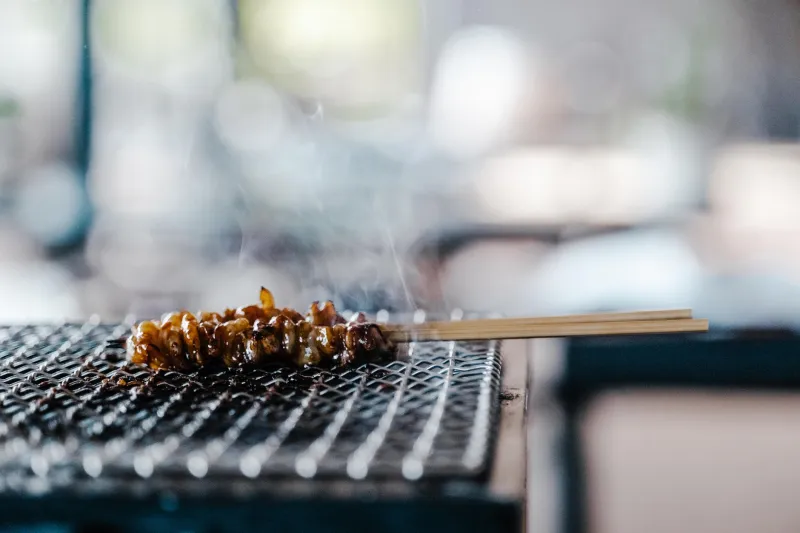
There's a moment that happens at every great yakitori joint in Tokyo — usually somewhere around the third round of skewers — where you stop thinking of dinner as a meal and start thinking of it as an event. The cook is right there, maybe two feet away, rotating skewers over white-hot binchotan coals, brushing on tare sauce with a practiced flick of the wrist. Smoke curls up through a narrow ventilation hood. The sizzle is almost musical. Guests lean in, not back.
That energy is completely achievable in your backyard. It doesn't require a commercial kitchen or a trip to Japan. What it does require is intentional design — thinking about your outdoor cooking space as a station rather than just a spot where the grill happens to live. At Fuji Grill USA, this is exactly the kind of setup we get excited about helping people build.
Start With the Right Grill Footprint
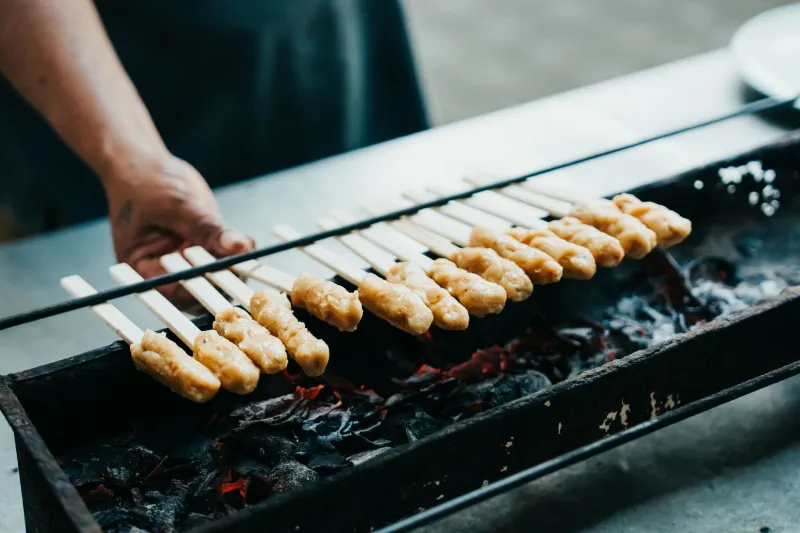
Traditional yakitori grills — called shichirin or konro grills — are long, narrow, and surprisingly compact. That shape isn't accidental. It's designed to hold a row of skewers across the width of the grill while keeping the heat source concentrated directly below. If you're using a dedicated yakitori konro (which we'd strongly recommend over trying to retrofit a standard round kettle), you'll notice it naturally creates a linear workflow: prep on one end, active grilling in the middle, resting on the far side.
For small patios or urban yards, this is actually a huge advantage. A konro grill and a simple wooden prep table can fit in a six-foot run along a fence or exterior wall, leaving the rest of your space open for seating. You don't need a sprawling deck. You need a focused lane.
If you're working with a larger patio and want to go bigger, consider a two-grill setup — one konro running hotter for searing chicken thighs, skin-on cuts, and vegetables, and a second set slightly cooler for finishing skewers and holding everything at temperature while you keep the line moving.
The Skewer Situation: Don't Skimp Here
Seriousness about yakitori starts with the skewers. Flat bamboo skewers (as opposed to round ones) are the standard for a reason — they grip the meat, prevent spinning when you rotate, and cook more evenly because the protein stays exactly where you put it. Stock up on both standard 6-inch skewers for bite-sized pieces and longer 10-inch versions for things like whole chicken wings or larger vegetable cuts.
Get a skewer rest or two. These are low-profile metal frames that sit across the width of your konro and let you park skewers at the edge of the heat zone — off direct flame but still warm — while you work the ones that need attention. In a busy backyard session with eight or ten guests, that holding capacity is what keeps everything from becoming chaotic.
Keep a deep container of water nearby for soaking bamboo skewers (at least 30 minutes before use), and dedicate one small cutting board exclusively to the raw protein side of your prep station. That separation matters.
Ventilation: The Overlooked Variable
Here's what most backyard grillers don't think about until smoke is pouring into their guests' faces: ventilation is part of the design. In Tokyo's yakitori alleys, those narrow spaces work because airflow is channeled upward — the smoke rises and clears. In your backyard, you have to engineer that intentionally.
Position your station so prevailing wind carries smoke away from your seating area. If you're up against a fence or wall, leave at least 18 inches of clearance behind the grill to allow heat to dissipate. For covered patios, a portable outdoor range hood or even a well-placed oscillating fan can make a dramatic difference in comfort.
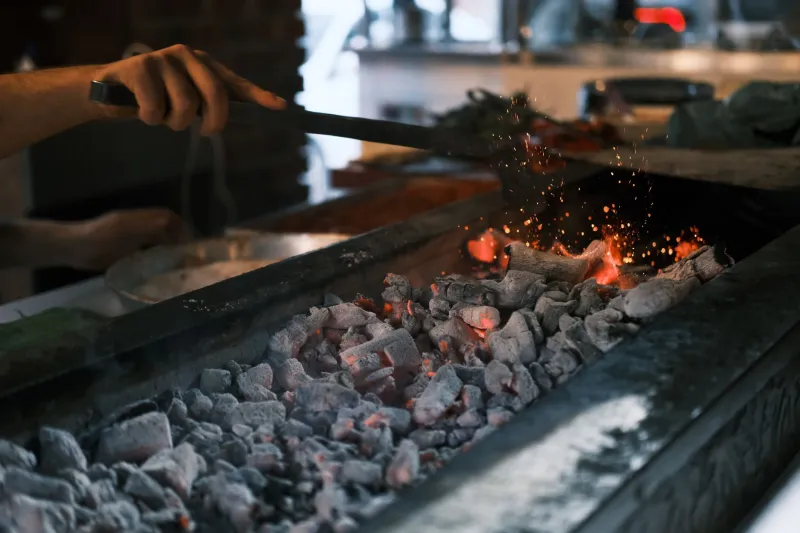
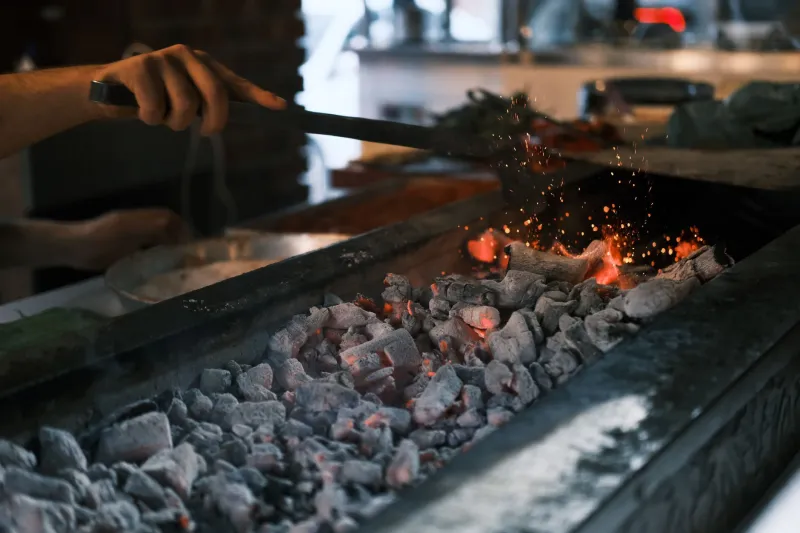
And honestly? Some smoke is part of the experience. The goal isn't to eliminate it — it's to direct it. Binchotan charcoal, which burns cleaner and hotter than standard charcoal, helps significantly here. Less visible smoke, more pure heat, and none of the chemical aftertaste you get from lighter-fluid-soaked briquettes.
Spatial Layout That Gets Guests Involved
This is where yakitori stations diverge most sharply from the standard American BBQ setup — and it's worth leaning into. Traditional backyard grilling in the US tends to put the cook at a distance from guests, working a large grill while everyone hangs back with drinks. Yakitori flips that dynamic entirely.
Design your station so guests can stand or sit at the prep area. Set out small bowls of prepped ingredients — sliced scallions, shishito peppers, cubed chicken thigh, king oyster mushrooms — and hand people skewers. Let them build their own. You handle the fire, they handle the skewering, and suddenly you have a collaborative cooking experience instead of a catered event.
A simple counter-height surface (a sturdy outdoor bar table works perfectly) running parallel to your grill keeps the interaction zone right next to the action. Add a few bar stools, a bottle of cold Sapporo or Japanese whisky highballs, and small dishes of tare sauce and kosher salt for dipping — and you've basically recreated the izakaya counter experience without the 14-hour flight.
The Tare Station: Your Secret Weapon
No yakitori setup is complete without a dedicated spot for your sauces. Tare — the sweet-savory glaze that defines yakitori's signature flavor — is traditionally applied mid-cook with a brush, layered in multiple passes to build depth. Set up a small heat-safe container of tare right at your grill station, with a natural bristle pastry brush for application.
Keep a separate container of finishing salt (flaky Maldon or Japanese shio salt) for skewers you're serving shio style — without sauce. Offering guests the choice between tare and shio versions of the same protein is a simple move that immediately elevates the experience and sparks conversation.
The Bigger Picture
Building a yakitori station isn't just a gear decision — it's a philosophy about how you want to cook and entertain. It says you're not interested in the passive, serve-and-sit model. You want the fire visible, the food interactive, and the whole evening built around the grill rather than just ending at it.
Tokyo figured that out decades ago in some very small, very smoky alleyways. There's no reason your backyard can't have the same energy.