Less Grill, Better Food: Why Stripping Down Your Setup Is the Smartest Thing You Can Do This Summer
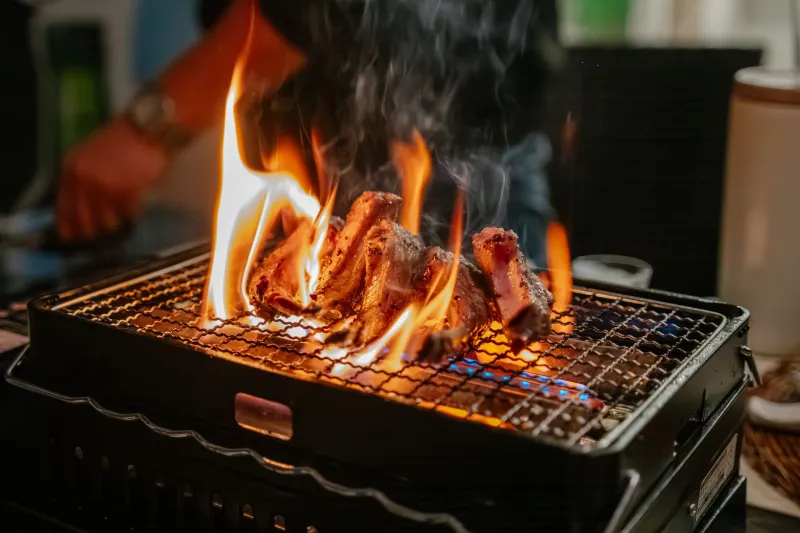
There's a particular kind of pride that comes with a fully loaded American grill setup. Six burners. A side sear station. A smoker box bolted to the left flank. Hooks for tongs, brushes, skewers, and a thermometer that connects to your phone. Maybe a rotisserie attachment you've used twice. It looks impressive. It photographs well. And for a lot of backyard cooks, it represents years of incremental investment in the pursuit of better food.
Here's the uncomfortable truth nobody wants to hear at a hardware store: most of it isn't making your food taste better. In fact, a lot of it is getting in the way.
The Japanese approach to grilling — the philosophy that sits at the heart of everything we do at Fuji Grill USA — operates from an almost opposite starting point. Restraint isn't a limitation. It's the whole method.
The American 'More Is More' Problem
Ask any serious home cook in the US what they bought last year for their outdoor kitchen, and you'll likely hear a list. A new griddle insert. A cast iron grate. A wireless probe set. A chimney starter upgrade. Maybe a new cover because the old one faded. The spending is real, and the logic behind it feels sound — better tools should produce better results, right?
Except the research, and frankly the food, often says otherwise.
When you have six burners, you manage six burners. Your attention splinters. You're monitoring temperatures across a surface the size of a small dining table, moving food around to compensate for uneven hot spots, second-guessing which zone to use. The complexity of the equipment becomes the complexity of the cook. And complexity, when it comes to fire and protein, is usually the enemy of great flavor.
Japanese grilling tradition understood this centuries before Weber ever welded its first kettle lid.
What Restraint Actually Looks Like in Practice
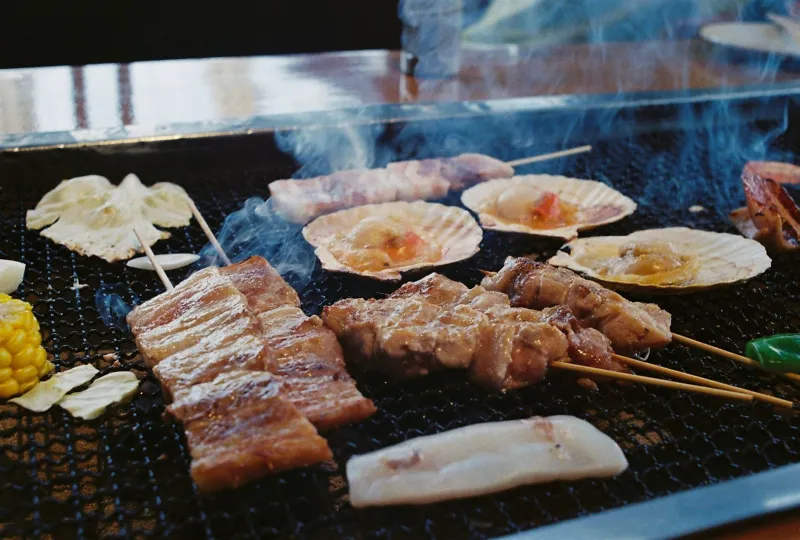
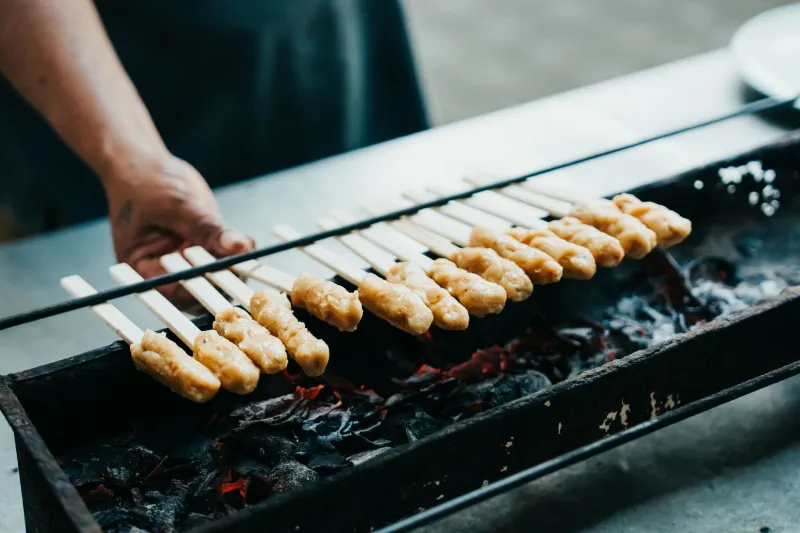
A traditional Japanese konro grill — the compact rectangular charcoal unit that anchors yakitori culture — is, by American standards, almost laughably small. We're talking roughly the footprint of a shoebox, sometimes two. It holds a controlled bed of binchotan charcoal and a pair of rails for skewers. That's essentially the whole machine.
And yet the food that comes off a well-managed konro routinely outclasses what emerges from setups that cost ten times as much. Why? Because the constraints force mastery. When you only have one heat source and one surface, you learn that heat source and that surface completely. You stop relying on gadgets to compensate for gaps in technique. You start developing instinct.
Fuji Grill USA designs around this same principle. Our equipment is deliberately focused — built to do specific things exceptionally well rather than everything adequately. That's not a marketing angle. It's a genuine philosophy rooted in how Japanese grill culture actually works.
Real Cooks, Real Downgrades, Real Results
Marcus, a home cook from outside Nashville, spent years building what he calls his "grilling command center" — a sprawling outdoor kitchen with a six-burner gas grill, a dedicated smoker, and a flat-top griddle. He was proud of it. He also felt vaguely dissatisfied with a lot of what he made on it.
After picking up a compact Japanese charcoal grill and working through the basics of direct heat management, something shifted. "I started cooking chicken thighs over binchotan and they were better than anything I'd made in years," he told us. "I wasn't doing anything fancy. I was just paying attention."
He still has the big setup. But the small grill gets used more.
Similar stories come up constantly in the Fuji Grill USA community. A home cook in Portland who sold her infrared sear station after realizing high-quality charcoal achieved the same crust with more flavor. A guy in suburban Chicago who stopped buying new thermometers after learning to read doneness by touch and visual cues — a skill that, once developed, never leaves you.
The pattern is consistent: less equipment, more attention, better food.
The Fuji Philosophy in Plain Language
Mount Fuji isn't complicated. It's one mountain. Perfectly formed, unmistakably itself. There's no clutter on the silhouette, no unnecessary additions. The elegance is structural.
That's the lens through which Japanese grilling approaches the question of equipment and technique. You identify the essential elements — quality fuel, controlled heat, good ingredients, focused attention — and you build around those. Everything else is noise.
In practical terms, this means:
Fewer heat zones, better understood. Rather than managing a six-zone gas grill, learn to create and read a two- or three-zone charcoal fire with genuine precision. You'll make better decisions with less information because the information you have is actually meaningful.
Ingredients over accessories. The money you'd spend on a new gadget almost always produces better results when spent on higher-quality protein, better charcoal, or a proper tare sauce. The grill doesn't make the food great. The food and the fire make the food great.
Technique as the long game. Japanese grill culture rewards practitioners who keep refining fundamentals over decades. The goal isn't to buy your way to great results. It's to cook your way there.
Why This Lands Differently for American Cooks Right Now
There's a reason this conversation is resonating beyond niche food culture circles. American home cooks are, broadly speaking, exhausted by complexity. The pandemic era of cooking at home produced a generation of more skilled, more curious backyard chefs — people who started asking harder questions about why food tastes the way it does.
Japanese grilling philosophy meets that curiosity with a clear answer: simplify, focus, repeat. It's the opposite of the upgrade cycle that most outdoor cooking brands want you to stay locked into.
At Fuji Grill USA, we'll be honest — we make equipment. But we'd rather sell you one piece of gear that genuinely changes how you cook than ten attachments that gather dust by September. That's not an accident. It's the whole point.
The Actual Takeaway
You don't have to sell your grill. You don't have to throw out your thermometer collection. But if you've been chasing better results by adding more to your setup and hitting a ceiling, it might be worth trying the opposite.
Set up a small charcoal fire. Use a simple grate or a handful of skewers. Cook one thing at a time and pay real attention to it. See what happens when the complexity disappears and all that's left is you, the fire, and the food.
Mount Fuji doesn't need any additions. Neither does a well-built fire.